
Nearly one in four American adults says they do not take prescribed medicine because it costs too much. This shows the urgent need for medication assistance across the United States.
This guide explains what medication assistance means and how these programs work. Medication assistance programs help people get prescription drugs at lower costs or for free. They include patient assistance programs (PAPs), discount plans, and insurance supports.
The article is for people with low income, uninsured or underinsured patients, caregivers, and healthcare professionals. It focuses on practical steps to find, qualify for, and apply to programs that lower drug costs.
Readers will learn about main types of programs—nonprofits, pharmaceutical company help, and government options. It covers eligibility rules, application guidance, common drugs covered (including specialty drugs), challenges, where to find help, and new trends in assistance.
Key Takeaways
- Medication assistance programs offer reduced-cost or free prescriptions through PAPs, discounts, and insurance supports.
- These programs target people with limited income, the uninsured, and underinsured patients needing prescription help.
- The article covers nonprofit, pharmaceutical, and government options for improving medication affordability.
- Readers will get clear eligibility guidance and a step-by-step application process for common and specialty medications.
- Practical resources and real-world examples help navigate barriers to accessing needed drugs.
What is Medication Assistance?

Medication assistance includes programs that help people get prescription drugs they cannot afford. These programs cover patient assistance programs by pharmaceutical companies, nonprofit grants and vouchers, and state or federal help. Their goal is to lower costs and keep patients on their treatments.
Understanding the Basics of Medication Assistance
Patient assistance programs (PAPs) from companies such as Pfizer, Johnson & Johnson, and Novartis provide free or cheap medicines to those who qualify. Nonprofit groups like NeedyMeds and the PAN Foundation give financial help or vouchers for prescriptions. State Medicaid programs and other government efforts offer subsidies and coverage as well.
Programs fall into two main types. Short‑term emergency aid helps people through brief times without coverage. Ongoing assistance supports chronic conditions like diabetes, hypertension, and HIV with regular supplies. Many services focus on long‑term needs, while others provide temporary relief.
Applications usually need proof of income, a current prescription or diagnosis, and residency confirmation. Sometimes a doctor’s signature is required too. Processing times vary from days to several weeks. Applicants should prepare documents and follow up within these time frames.
Importance of Medication Access
Having access to needed drugs helps patients follow treatment plans and lowers the chance of complications. Patients with steady medication supplies avoid hospital stays more often. This access improves management of chronic illnesses, benefiting both individuals and healthcare systems.
The economic impact is strong. Patients save money on drug costs, and clinics get fewer unpaid bills. Hospitals face lower expenses by treating fewer medication‑related problems. Public health gets better when more people receive medicines on time.
Legal and ethical concerns are important. Programs must protect patient privacy and get informed consent. They should ensure fair enrollment across race, ethnicity, and location. Clear policies keep trust and promote wider use of medication access programs.
| Program Type | Typical Providers | Common Requirements | Processing Time |
|---|---|---|---|
| Pharmaceutical PAPs | Pfizer, Johnson & Johnson, Novartis | Income proof, prescription, residency, doctor signature | 1–6 weeks |
| Nonprofit Assistance | NeedyMeds, PAN Foundation | Application form, financial info, medical need verification | Several days to 4 weeks |
| Government Programs | State Medicaid, Medicare Extra Help | Eligibility based on income, disability, citizenship/residency | 2–8 weeks |
| Short‑Term Emergency Aid | Community clinics, charitable funds | Proof of immediate need, basic ID | Same day to 1 week |
Types of Medication Assistance Programs
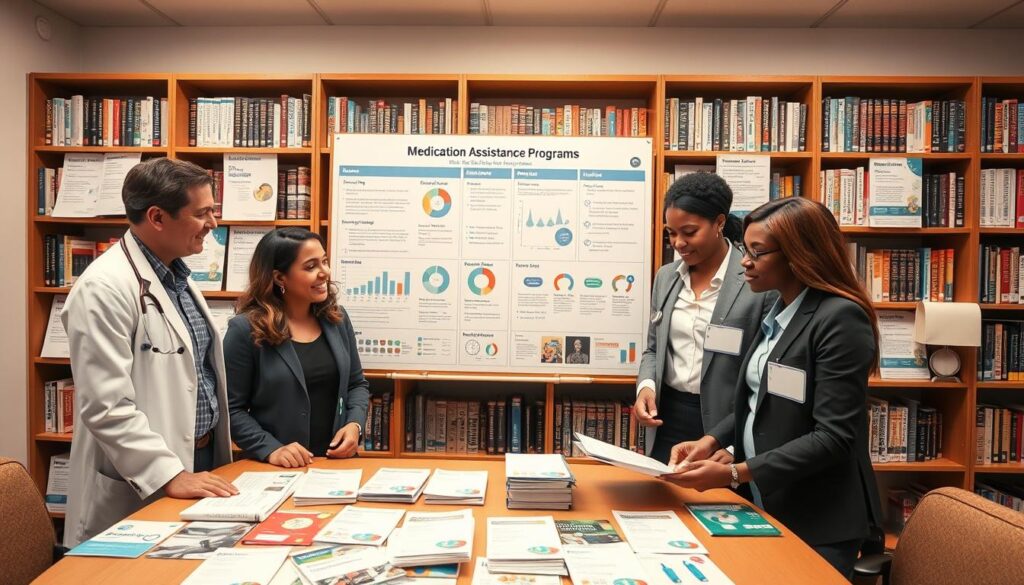
The landscape of medication assistance programs includes nonprofits, drugmakers, and government options. Each serves different needs and follows distinct rules. Use this guide to find the right medication support or aid program for you.
Non-profit organizations
National nonprofits such as NeedyMeds, Partnership for Prescription Assistance, and the PAN Foundation offer various medication support services. They provide drug discount cards, co-pay help, and disease-specific grants for conditions like diabetes or cancer. These groups also refer people to specialty foundations such as the American Diabetes Association and to local charitable clinics.
Eligibility varies; some base help on financial need and diagnosis rather than insurance status.
Pharmaceutical companies
Many manufacturers run patient assistance programs like Pfizer RxPathways, Merck Patient Assistance Program, and Novartis Patient Support. These may supply free medication to uninsured patients and reduced co-pay programs for insured patients. Applicants usually need physician approval and must meet income and documentation rules.
Manufacturer co-pay cards for brand-name drugs lower out-of-pocket costs and act as pharmaceutical assistance.
Government programs
Federal and state programs help cover prescription costs in different ways. Medicare Part D plans provide coverage gap help and the Extra Help (Low-Income Subsidy) for eligible people. Medicaid offers state-level prescription coverage, and the Department of Veterans Affairs provides VA pharmacy benefits to veterans.
Some states run pharmaceutical assistance programs for older adults and people with disabilities. Rules affect qualification for manufacturer PAPs: some exclude those with public coverage, while others accept them.
How to Qualify for Assistance
Qualifying for medication assistance starts with knowing income rules and how insurance impacts access. Many programs have limits based on the federal poverty level or set household income caps.
Applicants should check early if they qualify for medication help. They can also try to get Rx help through manufacturer programs or nonprofit funds.
Income-Based Eligibility Criteria
Programs often use multiples of the federal poverty level, like 200% to 400% of FPL, or have specific household income caps. Thresholds differ between pharmaceutical patient assistance programs and nonprofit groups.
Household size matters. Income of spouses and dependents may count when calculators set limits.
Applicants need to provide proof of income. This may include recent pay stubs, tax returns, or Social Security benefit letters.
Self-employed people can provide a notarized income affidavit. Some programs accept bank statements or letters from employers if usual documents are missing.
Some programs allow exceptions or appeals. High medical bills, unemployment, or sudden income loss may help get approval.
Families should ask about appeal steps and hardship rules before applying.
Insurance Status and Its Impact
Insurance affects what help you can get. Manufacturer programs often exclude Medicare Part D or Medicaid holders from free drug offers.
People with private insurance may get co-pay help instead of free medicine.
Co-pay cards help insured patients pay out-of-pocket costs for brand-name drugs. Patient assistance programs give free drugs to uninsured or underinsured patients.
Applicants must know the difference to pick the right help.
Many cases need coordination of benefits. Applicants should have insurance cards, plan details, and prescription coverage info ready.
Programs may check coverage before approving Rx help.
If insurance costs are high, there are options. Manufacturer co-pay programs, state help, nonprofit grants, and discount pharmacies can lower bills.
Patients should contact drug makers, community health centers, or social workers to explore options and check eligibility.
| Factor | Common Requirement | Effect on Eligibility |
|---|---|---|
| Income threshold | 200%–400% of FPL or fixed household cap | Determines basic qualify for medication assistance status |
| Household size | Count spouse and dependents | Adjusts income limits and benefit level |
| Proof of income | Pay stubs, tax returns, SSA statements, notarized affidavit | Required for verification and faster approval |
| Insurance type | Private, Medicare, Medicaid, uninsured | Affects eligibility for PAPs versus co-pay assistance |
| Special circumstances | Catastrophic costs, temporary unemployment | May allow exceptions or appeal approval |
| Documentation for benefits | Insurance card, plan details, prescription coverage info | Needed for coordination of benefits and Rx assistance verification |
Steps to Apply for Medication Assistance
Applying for medication aid starts with good preparation. The process is faster when applicants gather needed documents. They must get help from prescribers and pick the right way to submit their application.
Gathering Necessary Documentation
Applicants need proof of income such as pay stubs, recent tax returns, or benefit award letters. They also need a government photo ID and proof of residency, like a driver’s license or a utility bill.
Include the current prescription or the physician’s prescription form. Some programs require a signed physician statement or recent medical records that confirm diagnosis and need.
Make photocopies or digital scans of each item. Keep the originals safe. A checklist helps avoid missing items. Documents should be dated within 30–90 days to prevent delays. Many programs want renewal every 6–12 months.
Ask the prescribing clinician for help. Many drug manufacturer programs ask a clinician to fill forms or give clinical justification. Clinic staff, nurses, or the office manager often help prepare and sign pages.
Where to Submit Your Application
Submission methods differ by program. Many drug maker sites offer online portals for enrollment. Pfizer RxPathways and Merck have web applications. NeedyMeds offers tools to find programs and how to apply. State pharmaceutical assistance programs usually have online pages via state health departments.
Mail-in packets and fax options are still common. Community health centers, hospital social workers, and clinic case managers accept in-person drop-offs and can send applications for patients.
Processing usually takes two to eight weeks. Applicants can check status online or by phone. If denied, gather papers for an appeal or resubmission and note deadlines.
Get help from pharmacists, clinic case managers, social workers, or nonprofit guides. They can help with prescriptions, submit forms, and track approvals in medication support services.
Common Medications Covered
Assistance programs often focus on drugs that treat chronic and high-impact conditions. Many patients find relief through medication access programs targeting diabetes, heart disease, mental health, respiratory illness, and HIV care.
Common medications include both generics and selected brand-name therapies. Generic drugs like metformin for diabetes and SSRIs for depression are widely available through discount programs. Brand-name support is common in patient assistance programs when costs are too high for those without coverage.
The following list highlights drug classes often included in assistance efforts.
- Diabetes medications: insulins like Lantus and Novolog, oral agents such as metformin
- Cardiovascular drugs: statins such as atorvastatin and various antihypertensives
- Mental health medications: SSRIs and mood stabilizers
- Respiratory treatments: short- and long-acting asthma inhalers
- HIV antiretrovirals: drugs supported by Ryan White programs and manufacturer initiatives
Below is a comparison showing how programs handle common coverage needs and specialty access.
| Drug Category | Typical Coverage Route | Brand Examples | Notes on Access |
|---|---|---|---|
| Diabetes | Medication access program, manufacturer PAPs, discount pharmacies | Lantus, Novolog, metformin | Insulin has dedicated manufacturer programs; oral generics are inexpensive at discount chains |
| Cardiovascular | PAPs, community clinic programs, generic discount | Lipitor (atorvastatin), common antihypertensives | Statins may be offered through older manufacturer support; generics are widely accessible |
| Mental Health | Prescription assistance services, clinic formularies, PAPs | Fluoxetine, sertraline, lithium | Programs prioritize consistent access to chronic therapy |
| Respiratory | Discount programs, manufacturer patient support for inhalers | Common inhaler brands and generics | Inhalers may need co-pay support or coupons for brand-name options |
| HIV | Ryan White, manufacturer assistance, specialty clinics | Branded antiretrovirals supported by targeted programs | Programs focus on continuity of care and may cover costly regimens |
Specialty medications include biologics, injectables, oncology agents, and therapies needing special handling. These drugs are rare in broad public programs.
Access to specialty medications usually goes through manufacturer support, disease foundations, or co-pay assistance. Programs often require detailed documentation and prior authorization.
Coordination with specialty pharmacies is also common. Delivery through specialty pharmacies, scheduled clinic administration, and case management support help patients. Prescription assistance services help navigate prior authorizations and secure co-pay help for these complex therapies.
Challenges in the Medication Assistance Process
Many people facing high drug costs find the route to help confusing. Medication assistance challenges arise from paperwork, shifting rules, and delays. This short guide outlines common barriers and practical ways to move forward.
Navigating the Application Maze
Application forms differ by program. Some require proof of income, while others ask for detailed medical records. These inconsistent rules make applying slow and confusing.
Processing times can take weeks. Renewals often need fresh documents. Applicants must recheck eligibility before each application.
Technical problems add extra stress. Many lack reliable internet to use online portals. Language barriers and trouble getting clinician signatures slow progress. These issues block access to help when it’s most needed.
Practical steps reduce denials. Clinic social workers, NeedyMeds, and patient advocates guide applicants. Pharmacy assistance programs help with paperwork. Preparing complete documents speeds approval and limits resubmissions.
Beware of scams targeting desperate applicants. Verify program legitimacy through state health departments or known nonprofits. Avoid offers that ask for payment upfront.
Overcoming Stigma in Seeking Help
Social and psychological barriers stop people from asking for help. Some fear judgment from family, employers, or clinicians. Shame can delay treatment and harm health.
Normalization helps. Major pharmaceutical companies and charities encourage applying. Clinicians often support patients through the process.
Privacy protection reduces discomfort. Speak with a trusted clinician or pharmacist in confidence. Use anonymous online resources to learn about medication support before applying.
Most programs protect records under HIPAA. This keeps medical info confidential. Focusing on health benefits can motivate action without stigma.
Resources for Finding Assistance Programs
Patients seeking help with medication can use national databases, government sites, pharmacy tools, and local clinics. This mix speeds access and lowers paperwork. It helps people on tight budgets afford their medications.
Online Tools and Websites
Several trusted sites help people find patient assistance. NeedyMeds offers a drug coupon and patient assistance database. RxAssist lists manufacturer programs and guides applications.
Partnership for Prescription Assistance provides a central search for maker programs. BenefitsCheckUp focuses on older adults seeking support.
Government sites add value too. Medicare.gov explains Extra Help and Part D details. State Medicaid portals list state pharmaceutical assistance programs. GoodRx and SingleCare offer price comparisons and coupons to help with medication costs.
Search tips improve results. Use official program names when you can. Check eligibility rules and required documents. Bookmark manufacturer pages for drugs you use to track updates and changes.
Local Community Health Centers
Federally Qualified Health Centers, community clinics, and hospital social work departments connect patients to medication help. They offer on-site enrollment support and may provide low-cost generic drugs.
These centers also manage cases, help navigate benefits, run sliding-scale clinics, offer sample medications, and refer patients to specialty foundations. They assist with applications and prior authorizations.
To find local help, call 2-1-1 for social service referrals. Search HRSA.gov for nearby FQHCs or contact your state Primary Care Association. Retail and independent pharmacists can suggest co-pay cards, provide 90-day generics for savings, and help with paperwork for ongoing access.
| Resource Type | Example | Primary Benefit |
|---|---|---|
| National patient databases | NeedyMeds, RxAssist | Centralized listings of manufacturer and nonprofit programs |
| Government portals | Medicare.gov, state Medicaid pages | Official program rules, Extra Help, and SPAP details |
| Price comparison platforms | GoodRx, SingleCare | Coupons and price checks to improve medication affordability |
| Local clinics and FQHCs | Community health centers, hospital social work | On-site enrollment, low-cost dispensing, case management |
| Pharmacy services | Retail and independent pharmacists | Co-pay card guidance, 90-day generics, prior auth help |
Success Stories: Real-Life Impact
Real patients and clinics report clear benefits from medication support services. Stories show restored treatment adherence and measurable drops in monthly drug costs.
These accounts demonstrate how targeted help can change health and daily life for many people.
Testimonials from Patients
A person with type 2 diabetes regained medication adherence after joining an insulin manufacturer patient assistance program. Clinic records show fewer emergency visits and better A1C readings within six months.
The patient avoided hospitalization and had less stress filling prescriptions.
A family caregiver used Ryan White-funded services to secure antiretroviral therapy for a relative. The program provided consistent access and counseling.
Clinic staff noted stronger viral suppression rates and a higher quality of life for the patient.
A Medicare beneficiary accessed Extra Help and reviewed their Part D plan. This lowered out-of-pocket costs and saved money on monthly copays.
The beneficiary maintained work hours and had fewer gaps in therapy. These prescription help stories show reduced financial strain and better adherence.
Case Studies of Effective Assistance
A community health center screened patients at intake with a medication access workflow. A benefits coordinator enrolled 200 patients in assistance programs in one year.
The clinic reported lower unpaid balances and better control of chronic conditions.
A pharmaceutical co-pay card program lowered copays for a chronic condition to under $10 per month. Adherence rose and refill gaps fell.
Clinic partners saw improved disease markers and fewer urgent visits after the card’s rollout.
A nonprofit grant covered specialty oncology co-pays. This helped patients continue treatment without interruption.
Care teams recorded higher therapy completion rates and less treatment-related anxiety.
Key lessons include proactive screening, dedicated staff for applications, close collaboration between prescribers and pharmacies, and routine outcome tracking.
These practices drive drug cost savings and sustain medication assistance success stories over time.
Future of Medication Assistance Programs
Medication aid program models are changing as technology, policies, and partnerships reshape how people get medicines. Digital tools and data analytics help programs reach patients faster and reduce paperwork. Advocacy groups and health systems push for policies to widen access and lower costs.
Trends and Innovations in Assistance
Online enrollment portals and mobile apps now centralize pharmaceutical assistance tools like patient assistance program (PAP) forms and copay card management. Telehealth speeds prescriber authorizations. Electronic prior authorization systems cut weeks from approval times.
Health systems and manufacturers test value-based agreements and specialty pharmacy networks. These aim to improve continuity of care for patients.
Advocacy for Broader Access to Medications
National nonprofits, patient advocacy groups, and professional organizations work on campaigns for drug pricing transparency and caps on out-of-pocket costs. Legislative efforts focus on expanding state program eligibility and preventing discrimination against public insurance applicants.
Clinicians and health systems are encouraged to screen for cost barriers. They invest in benefits navigation staff to connect patients with assistance.
The future of medication assistance likely blends program innovation, stronger policies, and broad collaboration across payers, providers, and manufacturers. These combined efforts aim to make assistance more reliable, timely, and fair for patients in the U.S.