
Advertisements
Nearly 70% of Americans say they learned something new from a podcast in the past year. This shows how popular audio learning has become for gaining skills and knowledge.
This guide helps readers find and evaluate educational podcasts. It highlights shows that teach and deepen understanding in science, history, career skills, health, parenting, and finance.
The article targets students, professionals, lifelong learners, and parents in the United States. It offers clear expectations with curated recommendations, listening tips, and format guides. These are designed to change listening from passive to active learning.
The guide compiles trusted series and practical advice so listeners can go beyond casual listening. The information moves from why podcasts are useful to show suggestions and ways to engage deeply.
Key Takeaways
- Educational podcasts offer on-the-go learning across many subjects.
- The guide highlights the best educational podcasts for different needs.
- Curated picks suit students, professionals, parents, and lifelong learners.
- Practical listening strategies help turn episodes into long-term knowledge.
- Recommendations balance trusted series with effective engagement techniques.
Introduction to Educational Podcasts
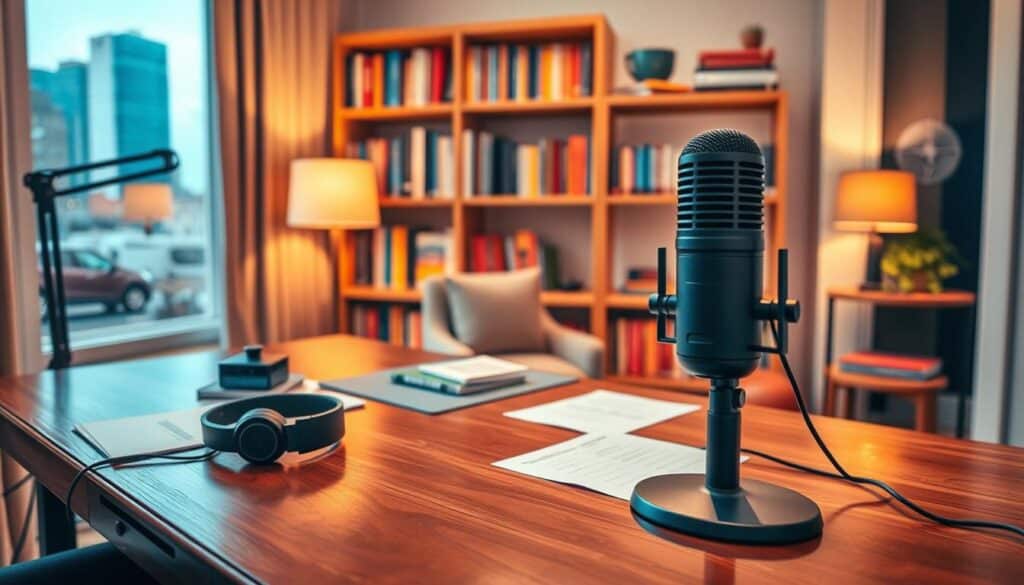
Podcasts offer a flexible way to learn while on the move. You can use commute time, workouts, and chores as study sessions. Episodes vary from quick 10-minute briefs to deep dives lasting hours.
This variety lets learners choose content that fits their schedule and attention span.
Audio learning suits auditory learners and those who multitask. Pairing podcasts with note-taking and spaced review can boost memory. Many shows feature experts from NPR, BBC, Gimlet, and universities, offering trusted voices and diverse views.
Benefits of Learning Through Podcasts
Access is a key benefit. Episodes are available on many platforms and can sync for offline listening. This makes learning easy to fit into daily life without disruption.
Serialized formats and subscriptions increase motivation. Regular releases help build habits and follow multi-part series. Good production quality and clear show notes improve trust in the information shared.
Podcasts offer microlearning and access to primary interviews. Short episodes fit quick skill-building. Long ones explore details and context deeply. Both kinds keep curiosity alive.
How to Choose the Right Podcast for You
Begin with clear criteria. Look at subject relevance, host credentials, episode length and frequency, production quality, and whether transcripts or notes are provided. Choose series that cite sources or link to studies.
Try two or three episodes before subscribing. Check ratings and reviews on platforms like Apple Podcasts, Spotify, and Stitcher for listener feedback. Hosts with academic or industry experience tend to be more credible.
Match the podcast format to your learning goals. Narrative stories build context and memory. Interviews offer practical tips. Short episodes suit daily learning bursts. Podcasts with transcripts help when studying or citing.
| Selection Criteria | What to Look For | Why It Matters |
|---|---|---|
| Subject Relevance | Focus aligns with learner’s goals | Ensures time spent produces useful knowledge |
| Host Credibility | Academic, journalist, or practitioner background | Improves trust and depth of insight |
| Episode Length & Frequency | Short daily episodes vs. long weekly deep dives | Matches attention span and scheduling needs |
| Production Quality | Clear audio, editing, and structured flow | Makes complex topics easier to follow |
| Show Notes & Transcripts | Links to sources, timestamps, and full transcripts | Supports study, citation, and review |
| Platform Ratings | Reviews on Apple Podcasts, Spotify, Stitcher | Reflects listener experience and reliability |
| Format Match | Narrative, interview, or short-form | Aligns with retention style and learning objective |
Top Educational Podcasts for Students
Students looking for reliable listening material can turn to standout shows that blend solid research with lively presentation.
These selections serve as an entry point to the best educational podcasts available.
They offer episodes that work well for class prep, project inspiration, or casual learning between assignments.

“Stuff You Should Know”
Stuff You Should Know appears on the HowStuffWorks network and is hosted by Josh Clark and Charles W.
The format pairs deep dives into everyday topics with a conversational tone mixing humor and evidence-based explanation.
Episodes last about 45–60 minutes and cover hundreds of topics, making this a great supplement for research or class discussion.
“TED Radio Hour”
TED Radio Hour is produced by NPR and curates ideas from TED speakers into hour-long thematic episodes.
The program expands individual TED Talks into narratives connecting big ideas across many fields.
Students benefit from themes that jumpstart research projects and classroom conversations. Transcripts and references are often on the NPR site, aiding assignments.
“Radiolab”
Radiolab, hosted by Jad Abumrad and Lulu Miller with rotating contributors, focuses on investigative, sound-rich journalism.
The show explores science, philosophy, and culture with bold audio design and strong storytelling.
Long-form episodes make Radiolab ideal for classroom deep dives or independent study needing a stimulating example of narrative inquiry.
Podcasts for Professionals and Career Development
Professionals who want to grow can learn from interviews, research episodes, and founder stories. These shows rank among the best educational podcasts for career skills and leadership. They suit many schedules and appear on major podcast platforms for easy access.
How I Built This features NPR host Guy Raz interviewing entrepreneurs about building companies and brands. Episodes run about 30 to 60 minutes. Listeners get clear lessons on business strategy, fundraising, leadership, and stories of failure.
Transcripts are available on NPR’s site. They help listeners study tactics and quotes in detail.
The Tim Ferriss Show uses long interviews to break down routines, tools, and habits of high performers. Guests include entrepreneurs, athletes, and artists. The show shares productivity hacks, book tips, and useful career advice.
Episode notes list resources and links for listeners to apply ideas directly in their lives.
WorkLife with Adam Grant is a Spotify series led by psychologist Adam Grant. Episodes focus on work psychology, team dynamics, creativity, and leadership through research and case studies. Each episode cites studies and suggests follow-up reading.
This podcast is ideal for managers, HR professionals, and career-driven listeners who want guidance based on evidence.
| Podcast | Host / Producer | Typical Length | Best For | Key Takeaways |
|---|---|---|---|---|
| How I Built This | Guy Raz / NPR | 30–60+ minutes | Founders, business students, professionals | Business strategy, fundraising, leadership, failure lessons; transcripts available |
| The Tim Ferriss Show | Tim Ferriss | 60–120 minutes | Productivity seekers, career changers, lifelong learners | Productivity hacks, book lists, tactical career advice; rich show notes |
| WorkLife with Adam Grant | Adam Grant / Spotify | 30–50 minutes | Managers, HR professionals, team leaders | Evidence-based insights on teamwork, creativity, leadership; cited studies |
For top podcast picks, check app categories and editorial lists on popular platforms. Picking episodes with transcripts and show notes speeds up learning. These top educational podcasts offer lessons that professionals can use the same day.
Science and Technology Educational Podcasts
Science and tech listeners will find shows blending research with engaging storytelling. These programs explain complex ideas and boost science literacy. They offer practical context for students and professionals.
The summaries below help readers choose episodes that match their curiosity and learning goals.
Science Vs from Gimlet Media examines popular claims using research first. Each episode compares beliefs on diet trends, supplements, or environment against scientific facts.
Show notes cite studies and experts so listeners can check sources. Myth-busting fans and those seeking clearer science literacy will like its steady, easy tone.
The Infinite Monkey Cage on BBC Radio 4 pairs physicist Brian Cox with comedian Robin Ince. They mix expert interviews and light comedy to discuss cosmology and climate.
This program’s high production quality helps listeners absorb complex ideas. It suits those wanting solid content with humor.
Reply All by Gimlet explores how people shape the internet and how the web shapes people. Hosts dive into scams, online communities, and tech culture.
Narrative episodes teach media literacy and explain technical topics simply. Students and professionals gain from its investigative style and practical context.
| Podcast | Focus | Best For |
|---|---|---|
| Science Vs | Fact-checking popular science claims with primary research and expert interviews | Listeners seeking evidence-based myth-busting and clear show notes |
| The Infinite Monkey Cage | Science discussions with humor, guest experts, and UK-style production | Those who want rigorous topics presented in an entertaining format |
| Reply All | Investigations into internet culture, scams, and tech phenomena | People aiming to improve media literacy and understand modern tech context |
Readers comparing educational podcast episodes and checking reviews find these shows among the best educational podcasts.
Pick episodes that fit study goals, then use show notes to follow the research and deepen learning.
History and Culture Podcasts
History and culture podcasts give deep context to past events and popular media. Listeners enjoy long-form stories and archival research. These make complex topics easier to understand.
This section highlights two top shows. They often appear on lists of best educational podcasts. Both receive strong reviews from educators.
Hardcore History by Dan Carlin offers epic, single-topic deep dives. Episodes can last several hours. They blend dramatic narration with detailed research.
This show suits advanced learners and history fans. Professors sometimes assign Carlin’s episodes as prep work. Listeners should check academic sources if using episodes for school.
You Must Remember This, by Karina Longworth, reveals Hollywood’s hidden stories. It focuses on archival detail and primary-source anecdotes. The series organizes episodes into themed seasons.
These seasons trace cultural shifts and controversies in film. Film students and cultural studies readers find these episodes helpful. They show how stories reveal bigger social trends.
Both shows explain why many rank them as top educational podcasts. They offer contrasting styles in educational podcasting. One presents grand, polemic history.
The other uses intimate, archival storytelling to show cultural change. Educational podcast reviews praise both programs for research quality and clear storytelling.
Health and Wellness Educational Podcasts
The following picks focus on practical, evidence-minded talks about nutrition, lifestyle, mental health, and behavior change.
These educational podcasts offer episodes balancing clinical insight with everyday tips for those wanting to improve wellbeing.
The Doctor’s Farmacy features Dr. Mark Hyman exploring functional medicine, nutrition, and metabolic health.
Guests include clinicians, researchers, and public-health experts who discuss diet patterns, inflammation, and lifestyle changes.
Listeners will find interview-style episodes diving into mechanisms and study results.
Episodes highlight evidence-backed wellness strategies and practical steps for metabolic health.
Listeners are advised to check claims with peer-reviewed research and consult healthcare professionals before major treatment or diet changes.
Feel Better, Live More is hosted by Dr. Rangan Chatterjee, blending medical insight with simple, actionable habits.
The show emphasizes small, gradual changes that improve sleep, stress, and mood.
Short, focused episodes make it easy to apply one tip at a time.
Each episode commonly includes patient stories, behavioral strategies, and summaries of key takeaways.
Many episodes offer further reading and resources for deeper topic exploration.
For anyone building a listening plan, these podcast picks provide deep dives and bite-sized guidance.
They complement each other: one show offers in-depth context, the other practical moves to try this week.
Parenting and Family Educational Podcasts
Podcasts for parents combine storytelling, research, and practical advice to help with daily challenges. Listeners seek trustworthy voices and clear guidance. Many episodes fit busy schedules.
The Longest Shortest Time
The Longest Shortest Time tells stories about parenting from newborn care to adolescent hurdles. Hosts share personal stories and expert interviews. This creates a warm and useful approach.
Episodes feature pediatricians, psychologists, and parents who provide research-based insights. This helps listeners build empathy and practical problem-solving skills.
This show is popular in educational podcast reviews. It suits both new and experienced parents well. Episodes vary in length, fitting short breaks or long commutes.
Janet Lansbury Unruffled
Janet Lansbury Unruffled focuses on respectful parenting based on Magda Gerber’s RIE methods. Lansbury shares clear advice about child development and calm discipline.
Each episode addresses common parenting problems with simple steps. Caregivers get short, practical advice for home use.
Listeners often check educational podcast reviews to compare episodes and methods. Parents wanting calm, respectful strategies find this show helpful.
Families can explore options by consulting educational podcast platforms. They can subscribe, read feedback, and follow recommendations that suit their needs.
Educational Podcasts for Personal Finance
Listeners who want clear advice will enjoy personal finance podcasts. These shows mix storytelling with useful tips. They make complicated money topics easy to understand for students and young workers.
Here are two great educational podcasts. They are known for clarity, trustworthiness, and helpful content.
Planet Money from NPR explains economics through engaging stories. Reporters use data, expert interviews, and narratives to show why events matter. The episodes often link to sources for deeper learning.
This show is a top choice for those studying macro and microeconomics.
The Dave Ramsey Show features callers seeking advice on budgeting and debt. Ramsey shares clear steps like the debt snowball and setting up emergency funds. These plans help listeners take action and improve their finances.
His advice shows his personal views. Listeners should compare his tips with other experts and their own needs.
Innovative Educational Formats in Podcasts
Podcasts use creative formats to teach, engage, and inspire listeners. This section outlines three popular approaches. Each suits different learning goals.
Narrative Storytelling
Narrative storytelling turns lessons into a journey. It uses character, plot, and layered audio to help listeners understand complex ideas.
Shows like Radiolab and Hardcore History use sound design and pacing to make abstract topics memorable. This format builds emotional connection and aids retention.
Production involves scripted narration, archival audio, and sound mixing to guide listeners through cause and effect.
Interview Style
Interview style shares lessons from experts and practitioners. Shows like How I Built This and The Tim Ferriss Show provide practical takeaways by focusing on guest experience.
Listeners get diverse views and useful advice. Many episodes offer show notes with resources and book recommendations to support learning.
Listeners should note timestamps for key points and follow guest bibliographies to explore topics further.
Roundtable Discussions
Roundtable formats feature multiple voices in one discussion. Episodes from TED Radio Hour and academic panels show experts debating ideas in real time.
This style highlights comparative analysis and exposes listeners to differing viewpoints. Educators can use these episodes to spark debates or create reading lists that explore each perspective.
How to Engage with Educational Podcasts
Engaging with educational podcasts changes passive listening into lasting learning. Listeners can develop a habit capturing facts, questions, and next steps.
The tips below help learners use note-taking and community interaction to get more from each episode.
Taking Notes while Listening
Use simple timestamped notes to mark useful moments. Write the minute, a short fact, and a link to any cited study or book.
This method makes it easy to return to a key segment later.
Adapt the Cornell method for audio by dividing a page into cues, notes, and a summary.
Put questions or action items in the cue column and main ideas in the notes column.
Finish with a one-sentence summary.
Try apps that clip or bookmark audio, like Overcast or Pocket Casts, to save segments. Capture transcripts and store them in a digital folder with linked articles.
This creates a reusable learning archive tied to educational podcast platforms.
Practice active-listening strategies. Pause and reflect after complex points. Replay key segments at 1.25–1.5x speed for review.
After an episode, write a 3–5 bullet summary listing main ideas and one action step.
Pair episodes with a short written reflection or a mini-project.
Add a note to a personal knowledge log with sources and follow-up tasks.
Over time, these logs show progress and make future podcast recommendations easier to choose.
Joining Online Communities
Join show-specific communities to discuss episodes and share resources.
Reddit subreddits, Facebook groups, and Discord servers host focused conversations where members post links and fact-check claims.
Follow podcasters and guests on social media to find episode notes and Q&A sessions.
Many hosts post sources or respond to listener questions. Engaging this way deepens learning and connects listeners to experts.
When participating, evaluate community claims critically. Cross-check surprising facts with academic papers or trusted news outlets.
Use community threads to collect varied viewpoints before adding them to your knowledge log.
| Action | Tools / Platforms | Benefit |
|---|---|---|
| Timestamped notes | Overcast, Pocket Casts, Google Docs | Quick retrieval of key moments and sources |
| Cornell for audio | Paper notebook, Notion, Evernote | Structured review and clear cues for study |
| Audio clipping & bookmarking | Overcast clip, Pocket Casts bookmarks | Create a highlights library tied to episodes |
| Active listening (pause & replay) | Any podcast player on educational podcast platforms | Improves retention and comprehension |
| Episode summaries | Personal blog, Notion, Obsidian | Condenses learning into actionable bullets |
| Community discussion | Reddit, Facebook groups, Discord | Access to diverse perspectives and shared resources |
| Follow-up with hosts | Twitter, Instagram, show notes | Clarifies claims and uncovers deeper sources |
Tips for Maximizing Your Podcast Experience
A few simple habits can turn casual listening into steady learning. Listeners should plan short, repeatable routines. Using app features helps keep episodes organized.
The aim is steady progress, not perfection, when following educational podcast recommendations. Browsing top podcasts on popular platforms also helps.
Creating a predictable listening schedule builds momentum. Pick times that fit daily life, like commutes, workouts, or chores. Set a realistic weekly goal, like two to three episodes.
Add episodes to a saved queue in Spotify, Apple Podcasts, or Overcast for easy access. Batch related episodes for deeper focus.
Listening to consecutive episodes on one topic creates continuity and improves retention. Mix long, deep dives with short, actionable shows to match attention span and energy levels.
Integrate episodes into a calendar and set reminders. Treat learning sessions like appointments. Use habit trackers to mark your progress. This makes listening a steady habit rather than a task.
To find a host who fits, sample multiple episodes before subscribing. Notice whether they teach, interview, or tell stories. Check posting frequency and how hosts engage listeners with Q&As or Patreon support.
Use platform tools and community signals to discover new shows. Browse personalized suggestions on Spotify or the For You features in Apple Podcasts. Read editorial reviews and curated lists on major podcast platforms.
Follow guest lists and cross-recommendations from trusted series. Subscribe to newsletters and follow creators on social media. This reveals bonus episodes and related series without overwhelming your listening queue.
Below is a quick comparison of scheduling and discovery tactics. These methods help you fit podcast listening into daily life and meet your learning goals.
| Goal | Practical Steps | Best Platforms/Tools |
|---|---|---|
| Build a daily habit | Assign commute or chore time, set reminders, track progress | Apple Podcasts, Spotify, habit apps |
| Deep thematic study | Batch related episodes, create topic playlists, schedule consecutive sessions | Overcast playlists, Spotify saved queues, Apple podcast stations |
| Manage attention | Alternate long and short episodes, limit daily listening time | Playback speed controls, episode length filters |
| Discover trusted hosts | Sample episodes, read editorial reviews, follow guest lists | Educational podcast platforms, curated lists, newsletters |
| Ensure long-term fit | Check host style, posting frequency, community engagement | Show notes, Patreon pages, listener forums |
Conclusion: The Future of Learning Through Podcasts
Educational podcasts have become a flexible, accessible tool for lifelong learning. They cover topics like science, history, career growth, and personal finance. Podcasts work well alongside textbooks and courses.
Listeners benefit most by choosing shows based on format, host credibility, and evidence-based content. Consulting educational podcast reviews helps find credible options.
Looking ahead, the landscape will shift toward richer searchability and platform integration. Transcripts and searchable audio will make episodes easier to cite and study.
Learning management systems and personalized recommendation algorithms will connect listeners to top podcasts matching their goals. Expect more microlearning episodes, hybrid video-audio formats, and collaborations creating research-backed material.
For practical steps, pick one recommended show and build a simple listening schedule. Use active-listening techniques, such as note-taking and joining community discussions, to turn listening into measurable learning.
Verify important claims against primary sources and consult professionals for medical, legal, or financial advice. With a deliberate approach, podcasts can be a reliable part of a modern learning routine.
This routine will be supported by growing tools and institutional partnerships.