

More than 4 million veterans used at least one veterans assistance program last year. This shows many rely on these services during and after the transition to civilian life.
This guide explains veterans assistance programs across the United States. It covers federal, state, and nonprofit options offering healthcare, housing, education, and financial support.
These programs help veterans and their families find stability, access care, and connect with local veterans resources.
The audience includes veterans from all service eras, surviving spouses, and dependents.
Common uses range from enrolling in VA healthcare and filing for disability benefits to finding emergency housing and pursuing post-service education.
Readers will find clear benefits information and practical steps for each scenario.
The article roadmap outlines what follows: definitions of program types and how to apply. It also compares federal versus state programs, key organizations, benefits and challenges, success stories, and future trends.
Use this section as a starting point to find relevant veterans resources, confirm eligibility, and learn who can help during the application process.
Key Takeaways
- Veterans assistance programs include federal, state, and nonprofit services focused on health, housing, education, and financial support.
- The guide targets veterans, surviving spouses, and dependents seeking veteran benefits information.
- Common reasons to use these programs are VA healthcare enrollment, disability claims, education benefits, and emergency housing.
- The article will explain eligibility, the application process, and differences between federal and state offerings.
- Readers will learn where to find veterans resources and which organizations can assist with applications.
Understanding Veterans Assistance Programs
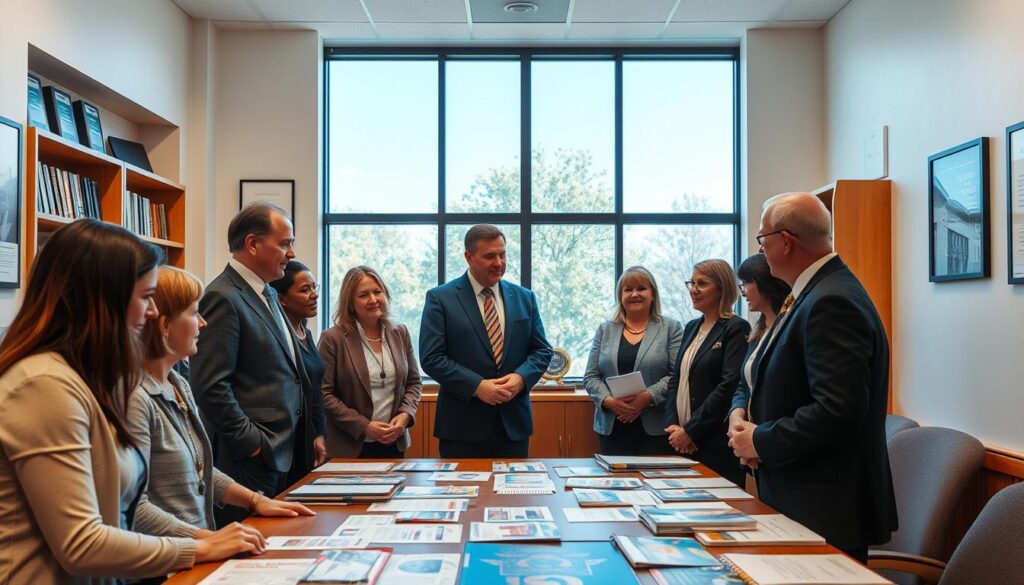
Veterans use many services after military life. These come from the U.S. Department of Veterans Affairs (VA), military branches, state veterans offices, and nonprofits. They create a safety net for health, housing, education, and money needs.
What Are Veterans Assistance Programs?
Veterans assistance programs offer benefits to former service members and their families. These include pay for service disabilities, pension help, and job training. Education benefits, like the GI Bill, and housing or mental health support are also included.
Law and rules guide these benefits. VA laws, state rules, and agency policies decide who can get help. Veterans apply through VA.gov, state sites, the Veterans Benefits Administration, or groups like the Wounded Warrior Project and USO.
Importance of These Programs for Veterans
These programs lower money troubles and improve access to healthcare and mental health help. They help with jobs, school, and prevent homelessness. Studies show veterans who use these services have better housing and healthcare.
Families gain from support for caregivers, and communities do better when veterans have stable jobs and homes. Using VA, state, and nonprofit help together works best for veterans.
Types of Veterans Assistance Programs
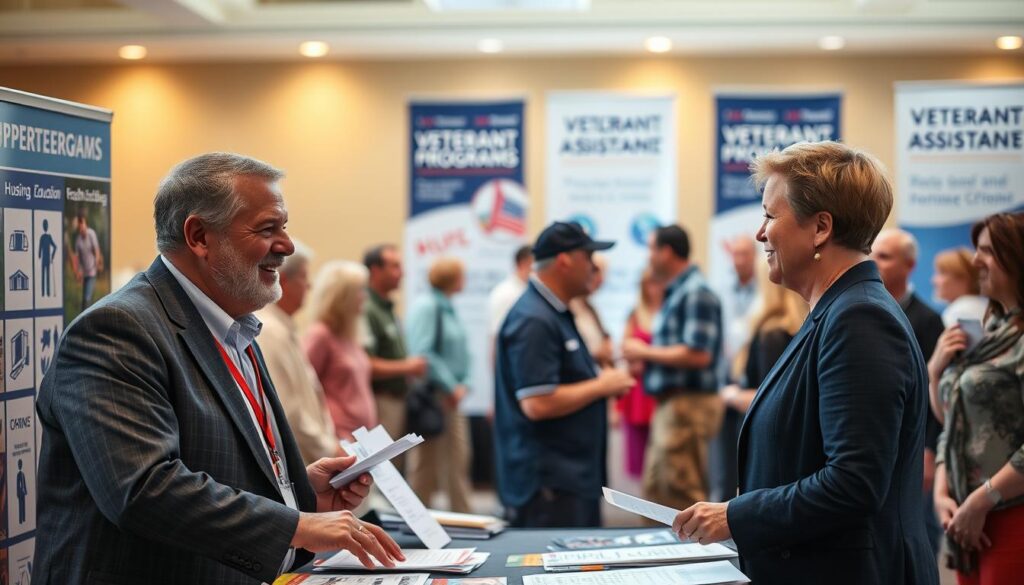
Veterans can access programs that cover education, money, housing, and health needs. These come from the Department of Veterans Affairs, state agencies, and nonprofits. Knowing each program helps veterans use benefits for better support.
Educational Assistance
The GI Bill, including the Post-9/11 and Montgomery versions, pays for tuition, housing, and books for eligible service members. Veterans may use Vocational Rehabilitation & Employment (VR&E) for training and job help. Nonprofits like The American Legion and Iraq and Afghanistan Veterans of America offer scholarships to widen options.
Eligibility depends on service time and discharge status. Some service members can transfer benefits to dependents. To apply, submit VA Form 22-1990 or apply online at VA.gov. VA counselors and veteran service officers provide benefits information.
Financial Assistance
Disability compensation and VA pension programs help veterans with disabilities or low income. Special Monthly Compensation gives extra funds for serious health issues. States provide emergency grants and aid through veteran affairs offices.
Supplemental Security Income and Social Security can add to VA payments. Nonprofits like Veterans of Foreign Wars and Disabled American Veterans keep emergency funds for urgent needs. Applying often requires proof of service and income.
Housing Assistance
The VA Home Loan Guaranty helps veterans buy homes with good rates and no private mortgage insurance. HUD-VASH combines HUD vouchers with VA case management to help homeless veterans find permanent housing.
Temporary housing programs and grants, such as Specially Adapted Housing, help veterans with disabilities adapt their homes. Veterans apply for VA loan eligibility certificates. They also contact local HUD or Continuum of Care partners for voucher help.
Healthcare Services
VA healthcare covers care for service-connected and non-service-connected conditions if veterans meet enrollment rules. Services include primary care, mental health, substance use disorder treatment, and women’s health programs.
The Veterans Community Care Program offers community care through partner hospitals and telehealth. Veterans should prepare VA medical records and expect a Compensation & Pension exam when applying for disability healthcare. Many veteran programs link healthcare with housing and jobs for better care.
Veteran service officers can help navigate veterans resources and benefits. Using educational, financial, housing, and healthcare programs together leads to stability and long-term success.
How to Access Veterans Assistance Programs
Accessing benefits can feel complex. A clear path helps veterans and families claim what they earned.
This section outlines eligibility basics and the step-by-step application process for veteran support services. It also covers veterans assistance programs and government programs for veterans.
Eligibility Requirements
Eligibility often depends on the length and character of service. Qualifying active-duty periods and honorable or general discharges matter.
Wartime service is important for specific pensions and education benefits.
Service-connected disabilities and income thresholds affect VA healthcare and pension access.
Priority groups determine enrollment in VA medical benefits based on service connection and household income.
State residency rules affect state-level veterans assistance programs. Each state has unique qualifiers for housing, education, and supplemental aid.
Common documents include DD Form 214, medical records, and service treatment records.
Dependency or marriage certificates apply when family benefits are requested. Gathering these early speeds claims and reduces the need for more evidence.
Application Process
Start by creating a VA.gov account using ID.me or Login.gov to access online forms.
Veterans can file common forms such as 22-1990 for education benefits and 21P-527EZ for disability compensation through VA.gov or eBenefits.
Submit supporting documents with each claim. Track progress via VA.gov or eBenefits dashboards.
Timelines vary by claim type. Education and enrollment decisions often take weeks. Disability claims may take months.
Appeals follow Board of Veterans’ Appeals procedures.
In-person help is available at regional VA offices, state departments of veterans affairs, and accredited representatives with the American Legion, Veterans of Foreign Wars, or Disabled American Veterans.
These organizations assist with filing, evidence gathering, and appeals.
Practical tips include keeping copies of all submissions and using certified mail or secure electronic submission. Request assistance from a veteran service officer early.
Be prepared for possible Compensation & Pension exams and additional evidence requests to support a claim.
Preparedness reduces delays. Gather documentation, choose the right application channel, and seek accredited help to navigate government programs for veterans.
This maximizes the chance of a timely decision.
Federal Programs vs. State Programs
The mix of federal and state offerings shapes support for veterans. Federal programs set standards across the nation. State initiatives adapt to local needs.
Together they expand access to government programs for veterans. They improve delivery by veteran assistance organizations.
Overview of Federal Programs
The U.S. Department of Veterans Affairs runs core benefits like VA health care, disability compensation, and GI Bill education benefits. It also offers VA Home Loan Guaranty, Vocational Rehabilitation & Employment, VA Pension, and HUD-VASH.
National eligibility rules and a central application site at VA.gov create a uniform path for applicants.
Federal funding comes through Congressional appropriations with oversight by House and Senate committees. The Board of Veterans’ Appeals handles formal appeals.
Recent efforts expand telehealth and community care. This widens how veterans resources reach rural and urban communities.
Overview of State Programs
Each state has a Department or Commission of Veterans Affairs like California’s and Texas’s that add state perks to federal benefits. Common offerings include burial benefits, property tax exemptions, tuition waivers, state veterans homes, entrepreneurship grants, and emergency financial aid.
State rules vary on residency, application processes, and eligibility. Some states run special employment and education programs that complement federal benefits.
Veterans can find state contacts through official state VA websites and county veterans service officers. This helps combine resources effectively.
Practical planning means checking both federal and state support. State programs often add meaningful extras beyond baseline federal aid. Together, they create a strong safety net.
Key Organizations Supporting Veterans
The network of support for veterans combines federal reach with community passion. Major partners coordinate care, benefits, and outreach. This helps veterans access services where they live.
This section highlights the primary federal agency and leading nonprofits. They deliver veteran outreach services. These groups also complement veterans assistance programs.
The Department of Veterans Affairs (VA)
The Department of Veterans Affairs runs a broad system with three branches: Veterans Health Administration, Veterans Benefits Administration, and National Cemetery Administration.
Each branch focuses on core needs like medical care, disability compensation, education benefits, home loan guaranty, and burial services.
Regional VA medical centers and benefits offices connect veterans to local care and claims support. The VA partners with federal agencies, state veteran offices, and community providers.
This extends VA reach into neighborhoods and rural areas. Recent initiatives include expanded telehealth and a community care program partnering with private providers.
The VA also upgraded claims processing. These efforts speed access and help underserved populations needing veteran assistance organizations and programs.
Nonprofit Organizations
Nonprofit groups fill gaps left by public systems. National chapters like The American Legion, Veterans of Foreign Wars, Disabled American Veterans, Wounded Warrior Project, Iraq and Afghanistan Veterans of America, and Team Rubicon work alongside local nonprofits.
Services include claims assistance, emergency financial aid, housing support, employment programs, education help, and mental health peer support.
Many nonprofits are accredited to represent veterans before the VA. They provide practical help with appeals and paperwork.
Veterans can contact national headquarters, visit local chapters, or use online portals to find nearby support. Look for groups partnered with hospitals, housing providers, and state agencies for reliable veteran assistance.
Using both VA programs and nonprofit partners increases options. Veterans service organizations offer claims advocacy. Other nonprofits provide job placement and peer mentoring.
These services strengthen the overall network of veterans assistance programs.
Benefits of Veterans Assistance Programs
The benefits of veterans assistance programs include health, housing, and economic stability. These services help veterans and their families move from crisis to steady life. Coordinated support boosts outcomes for many who served.
Improving Quality of Life
Comprehensive medical care and mental health services reduce symptoms of PTSD and chronic conditions. Rehabilitation programs and family caregiver support help restore daily functioning.
Studies show that veterans using integrated care report better health and higher employment rates. Coordinated treatment makes community reintegration easier.
Financial Security
Disability compensation, pensions, VA-backed home loans, and education benefits lessen economic stress. These tools support homeownership and career development for veterans.
Tax advantages and state benefits, like property tax exemptions or pensions, strengthen long-term financial resilience. Sound planning helps veterans secure their finances.
Access to Resources
Crisis hotlines like the Veterans Crisis Line, local veteran service officers, employment programs, and housing assistance form a safety net. These resources prevent homelessness and financial collapse.
Streamlined intake via VA.gov and community partnerships help veterans access supports at once. Working with counselors and service organizations improves benefit planning.
| Benefit Area | Typical Services | Primary Outcome |
|---|---|---|
| Health and Wellness | Primary care, mental health counseling, rehabilitation, caregiver support | Improved daily functioning and reduced hospitalizations |
| Economic Support | Disability pay, pensions, VA home loans, GI Bill education | Reduced financial stress and increased job training |
| Housing and Safety Net | Homelessness prevention, housing vouchers, emergency assistance | Lower rates of homelessness and stable housing retention |
| Navigation and Casework | VSOs, VA.gov intake, community case managers | Faster access to multiple veterans resources and coordinated care |
Common Challenges Faced by Veterans
The path to benefits can feel confusing for many veterans and their families. Complex rules, long waits, and missing paperwork make it harder to access assistance programs. The next paragraphs explain typical hurdles and ways to reduce delays.
Navigating the Application Process
Claims often stall because of complex paperwork and delayed medical exams. Veterans may struggle to get service medical records or prove service connection for conditions. Appeals build up at the Board of Veterans’ Appeals, which extends resolution times.
Working with accredited veteran service organizations like the American Legion and Disabled American Veterans can cut through the paperwork. These VSOs know evidence rules and help prepare thorough documentation. Tracking claims on eBenefits or VA.gov gives clearer timelines.
When cases get complex, legal counsel familiar with VA law can help with appeals and hearings. Careful record-keeping, early submission of documents, and timely follow-up reduce avoidable setbacks.
Awareness of Available Resources
Many veterans do not know about state benefits, local nonprofit help, or specific federal entitlements. Rural and minority veterans face bigger gaps in outreach. Limited internet access, language barriers, and underfunded local services deepen these blind spots.
Stronger veteran outreach and community partnerships can reach those who are missed. Mobile vet clinics, pop-up enrollment events, and translated materials boost access in underserved areas. Public campaigns partnering with state and local nonprofits widen awareness.
Practical steps include contacting a VSO, checking state veterans affairs offices, and tapping community groups for resources. Advocacy and steady outreach make it easier for veterans to find help they earned.
| Challenge | Typical Impact | Practical Remedy |
|---|---|---|
| Complex paperwork | Delays, incomplete claims, denials | Use accredited VSOs for document prep |
| Long waiting periods | Financial strain, stress | Track claims on eBenefits or VA.gov; request status updates |
| Difficulty obtaining records | Weakened service-connection evidence | Order records early; obtain VA or DoD assistance |
| Appeals backlog | Extended resolution timelines | Hire experienced legal counsel for complex appeals |
| Low awareness of programs | Underutilization of benefits | Expand veteran outreach services and public campaigns |
| Rural and language barriers | Access gaps for certain groups | Mobile clinics, translated outreach, community partners |
| Underfunded local services | Limited on-the-ground support | Build partnerships with nonprofits and state agencies |
Success Stories from Veterans
Real-life accounts show how veterans assistance programs change lives. Many veterans used the GI Bill to earn degrees. This helped them start careers with stable incomes.
Others received VA disability compensation that helped secure steady housing. Access to mental health care helped veterans recover from trauma. It also helped them regain normal daily functioning.
Claims assistance from Veterans Service Organizations sped up benefit receipt. Groups like the American Legion or nonprofit case managers provided this help. Faster access to benefits led to clear gains.
Evaluations show higher employment, sustained sobriety, and improved mental health. These benefits appeared among veterans who used these support services.
Inspiring Personal Narratives
One Marine used GI Bill benefits at the University of Maryland to earn a nursing degree. Now, he works in a VA hospital.
A Navy veteran who received VA disability payments secured long-term housing. He also enrolled his children in local schools.
An Army National Guard member found counseling through community clinics. He reported recovery from PTSD and returned to steady work.
Support services from Disabled American Veterans and Wounded Warrior Project provide hands-on help. They assist with claims and care coordination. These services shorten wait times and improve success rates for veterans seeking benefits.
Impact on Families and Communities
Household stability improved when benefits covered rent, healthcare, and education. Caregiver programs eased family burdens and helped children perform well in school.
Veterans who accessed benefits reduced financial stress at home. This boosted overall family well-being.
At the community level, veterans assistance programs reduced homelessness using transitional housing and outreach. Nonprofit partnerships delivered services to underserved neighborhoods.
Employment programs that hire veterans bolster local economies. These efforts create benefits for small towns and cities.
Peer mentorship and reintegration projects encourage veterans to engage civically. Veterans who mentor peers often take leadership roles. These networks strengthen social ties and improve long-term results for returning service members.
| Type of Support | Example | Measured Outcome |
|---|---|---|
| Education Benefits | GI Bill funding for college and vocational training | Higher employment rates and credential attainment |
| Claims Assistance | Case management from Veterans Service Organizations | Faster benefit approval and reduced appeals |
| Housing Support | Transitional housing and rental assistance programs | Lower veteran homelessness and housing stability |
| Mental Health Care | Community clinics and VA counseling services | Improved mental health, reduced substance use |
| Employment Programs | Veteran hiring initiatives and vocational coaching | Increased local employment and economic growth |
| Family Support | Caregiver assistance and child education aid | Enhanced family stability and child outcomes |
These stories show how veteran support services unlock potential and inspire others. Sharing examples encourages veterans and families to seek available programs and benefits.
Future of Veterans Assistance Programs
As veterans assistance programs evolve, care providers and policymakers adopt flexible, data-driven systems. Telehealth and expanded community care are now standard options. The Department of Veterans Affairs prioritizes digital tools to streamline claims.
Efforts to prevent veteran homelessness and address the needs of women and minority veterans are gaining momentum.
Trends and Changes in Support
Technology upgrades improve access to care. Interoperable health records and online intake portals speed service and reduce duplication. Predictive analytics help target outreach to veterans at highest risk.
Proposed legislation aims to increase VA staffing, caregiver benefits, and mental health funding. These changes boost the reach and quality of veteran support nationwide.
Importance of Continued Advocacy
Sustained advocacy by veterans, families, service organizations, and elected officials protects gains and expands benefits. Individuals can contact representatives, submit public comments on VA rule changes, and volunteer locally.
Policymakers should focus on claims modernization and mental health. Community groups must scale outreach to rural and minority veterans.
Active engagement keeps veterans assistance programs responsive. Veterans and allies who stay informed and join advocacy efforts help create timely, fair, and effective support.